With Event management software at the forefront, this paragraph opens a window to an amazing start and intrigue, inviting readers to embark on a storytelling casual formal language style filled with unexpected twists and insights.
Event management software offers a comprehensive solution for organizing and managing events efficiently, saving time and effort for event planners. Let’s delve into the world of event management software and explore how it revolutionizes the event planning process.
Event Management Software
Event management software is a valuable tool that helps in planning and organizing events efficiently. It offers a wide range of features that simplify the entire event planning process, from initial brainstorming to post-event analysis.
Features of Event Management Software:
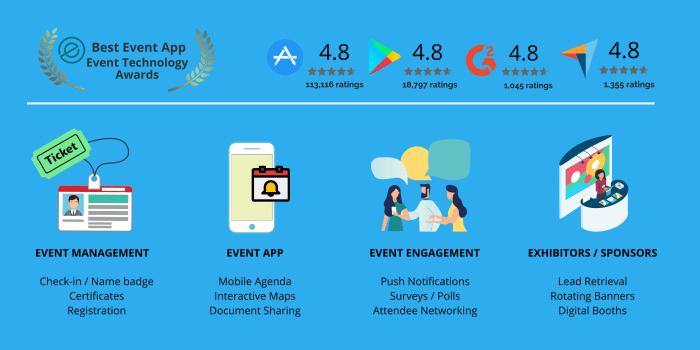
- Online Registration and Ticketing: Allows attendees to register and purchase tickets online, streamlining the process.
- Agenda Management: Helps in creating and managing event schedules, sessions, and speakers.
- Venue Selection and Floor Planning: Assists in choosing the right venue and arranging seating layouts.
- Communication Tools: Enables sending out invitations, updates, and reminders to attendees.
- Budgeting and Financial Tracking: Helps in managing event budgets and tracking expenses.
How Event Management Software Streamlines Event Planning:
Event management software automates various tasks, reducing manual effort and minimizing the chances of errors. It centralizes all event-related information in one place, making it easier for event planners to collaborate and communicate effectively. Additionally, it provides real-time updates and analytics, allowing for quick decision-making and adjustments during the event planning process.
Comparison of Event Management Software:
| Software | Cost | Features | Ease of Use |
|---|---|---|---|
| Software A | $$$ | Comprehensive features including registration, agenda management, and communication tools. | Intuitive interface, but may require training for full utilization. |
| Software B | $$ | Basic features such as online registration and budgeting. | User-friendly interface suitable for beginners. |
| Software C | $$$$ | Advanced features like venue selection and floor planning. | Robust interface with a steep learning curve. |
Benefits of Using Event Management Software
Event management software offers a wide range of benefits for both event planners and attendees. From improving efficiency to enhancing communication, the advantages are significant.
Improved Efficiency in Event Planning
- Streamlining registration processes, making it easier for attendees to sign up and for planners to manage registrations.
- Automating tasks such as sending out invitations, reminders, and confirmations, saving time and reducing manual errors.
- Centralizing all event details, including schedules, budgets, and attendee information, for easy access and organization.
Enhanced Communication and Collaboration
- Facilitating real-time communication among event stakeholders, such as vendors, sponsors, and speakers, through integrated messaging systems.
- Allowing for seamless collaboration on event details, such as agendas, presentations, and logistics, through shared platforms.
- Providing a centralized hub for all event-related information, ensuring everyone is on the same page and up to date.
Key Features to Look for in Event Management Software
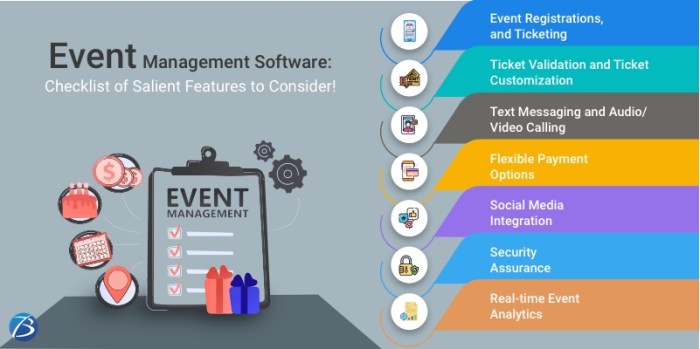
When choosing event management software, it is crucial to consider the key features that will help streamline the planning and execution of events. Here are some essential features to look for in event management software:
1. Registration Management
- Ability to create customizable registration forms
- Secure payment processing integration
- Automated confirmation emails for registrants
2. Attendee Management
- Check-in and badge printing functionality
- Real-time attendee tracking and reporting
- Option to send personalized communications to attendees
3. Agenda and Schedule Management
- Easy-to-use calendar and scheduling tools
- Session and speaker management capabilities
- Ability to make real-time updates to the event agenda
4. Marketing and Promotion Tools
- Email marketing integration
- Social media sharing features
- Customizable event website or landing page builder
5. Reporting and Analytics
- Generate custom reports on registration data, attendee demographics, and more
- Track key metrics like ticket sales and revenue
- Gain insights to improve future events based on analytics
6. Integration Capabilities
- Ability to integrate with other tools like CRM systems and marketing platforms
- Seamless data syncing across different platforms
- Custom API options for advanced users
Event Planning
Event planning is a crucial aspect of organizing successful events, whether it’s a corporate conference, wedding, or a music festival. It involves several key steps to ensure everything runs smoothly on the day of the event.
Key Steps in Event Planning
- Define the event objectives and goals to guide the planning process.
- Create a budget to allocate resources effectively and prevent overspending.
- Select a suitable venue that aligns with the event’s theme and accommodates the expected number of attendees.
- Develop a timeline with deadlines for tasks such as securing vendors, sending invitations, and finalizing event logistics.
- Coordinate with vendors, including caterers, decorators, and audiovisual providers, to ensure all aspects of the event are covered.
- Market the event to the target audience through various channels to boost attendance and generate interest.
- Prepare contingency plans for unforeseen circumstances like bad weather or technical issues.
Importance of Budgeting and Timeline Management
Effective budgeting is essential to ensure that resources are allocated wisely and costs are kept under control. It helps prevent overspending and allows event planners to prioritize expenses based on their impact on the event’s success. Timeline management ensures that tasks are completed on time, preventing last-minute rushes and ensuring a seamless event execution.
Using Event Management Software for Scheduling
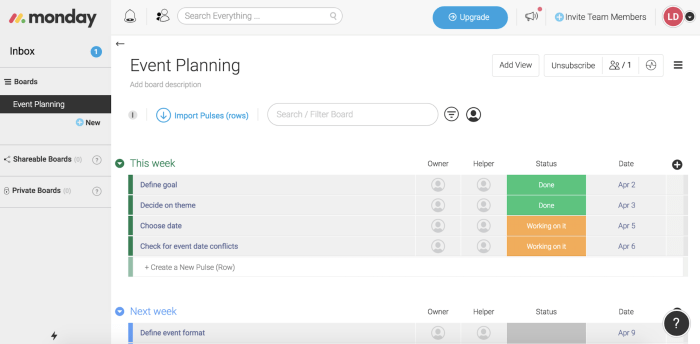
Event management software can streamline the scheduling process by allowing event planners to create detailed event timelines, assign tasks to team members, and set reminders for deadlines. By centralizing all scheduling information in one platform, event planners can ensure that everyone involved in the event is on the same page and that no important task is overlooked.
In conclusion, Event management software emerges as a game-changer in the event planning industry, providing a seamless experience for planners and attendees alike. With its array of features and benefits, it’s clear that incorporating such software can elevate any event to new heights of success.
Query Resolution
What are the key features to look for in event management software?
Key features to consider include attendee management, registration tools, marketing capabilities, and reporting functionalities.
How does event management software enhance communication among stakeholders?
By providing a centralized platform for sharing information, updates, and feedback, event management software fosters better collaboration and coordination among all involved parties.
Can event management software be customized for different types of events?
Yes, many event management software options offer customizable features that can be tailored to suit the specific needs and requirements of various events, from conferences to festivals.