Embark on a journey into the world of event planning with our comprehensive checklist. From essential tasks to creating timelines and customizing for different events, this guide has you covered.
Learn how to streamline your planning process and ensure your event is a success from start to finish.
Event Planning Checklist
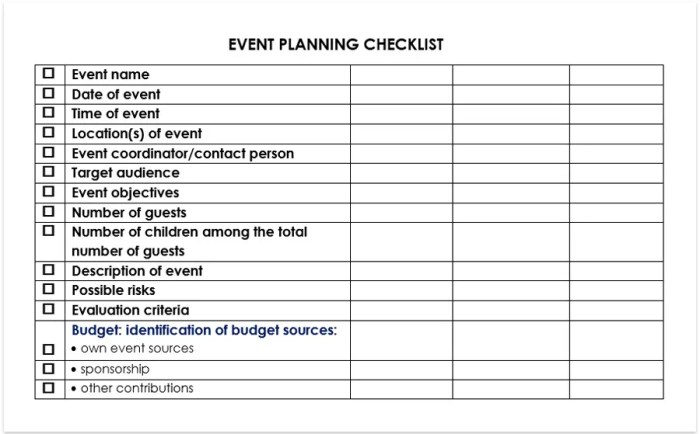
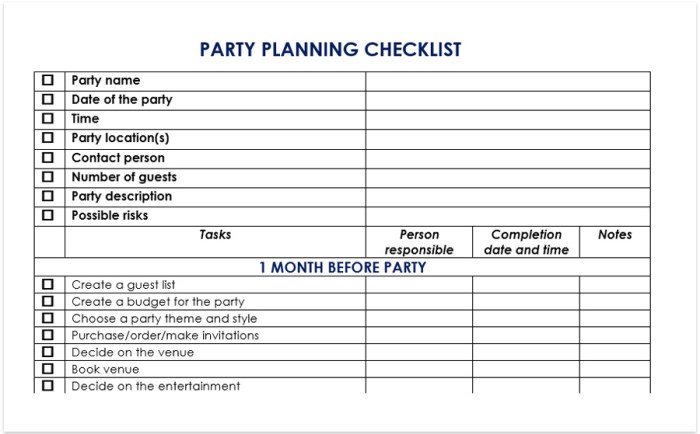
Planning an event involves a multitude of tasks that need to be carefully organized and executed. Creating a comprehensive event planning checklist can help ensure nothing is overlooked and that the event runs smoothly from start to finish.
Essential Tasks for an Event Planning Checklist
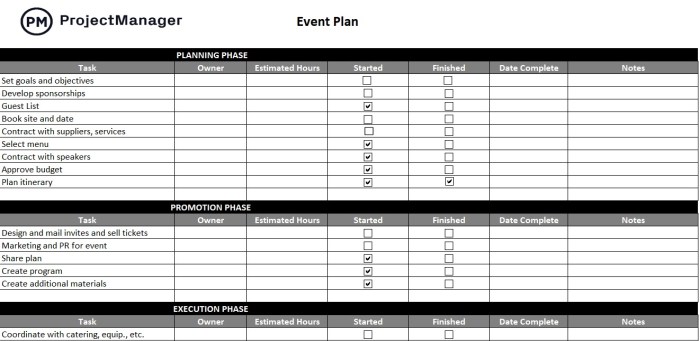
- Define the event objectives and goals.
- Create a budget and allocate funds for various aspects of the event.
- Select a date, time, and venue for the event.
- Secure necessary permits and licenses.
- Develop a guest list and send out invitations.
- Arrange for catering, entertainment, and other vendors.
- Create a marketing and promotional plan.
- Design event materials such as signage and programs.
- Coordinate transportation and accommodations for guests.
- Create a contingency plan in case of unforeseen circumstances.
Creating a Timeline for Organizing Tasks
Developing a timeline is crucial for organizing and prioritizing tasks on the event planning checklist. By setting specific deadlines for each task, you can ensure that everything stays on track and is completed in a timely manner. This helps prevent last-minute rushes and allows for adjustments if needed.
Customizing the Checklist for Different Events
Depending on the type of event being organized, the checklist may need to be customized to suit the specific requirements and nuances of that event. For example, a corporate conference checklist may include tasks related to speaker arrangements and presentation materials, while a wedding checklist may focus on aspects like venue decorations and bridal party attire. Tailoring the checklist to fit the unique needs of the event can help streamline the planning process and ensure a successful outcome.
Budgeting and Finance
Budgeting is a critical aspect of event planning as it helps ensure that resources are allocated efficiently and effectively. By creating a budget, event planners can track expenses, manage finances, and make informed decisions throughout the planning process.When creating a budget for an event, it is essential to consider various common expenses to ensure all aspects of the event are covered.
Some examples of expenses to include in the budget are venue rental fees, catering costs, entertainment expenses, transportation fees, promotional materials, staffing costs, and miscellaneous expenses such as decorations or equipment rentals.To track expenses and manage finances effectively, event planners should maintain detailed records of all expenditures, including invoices, receipts, and contracts. By regularly updating the budget with actual expenses, planners can stay on track and make adjustments as needed to ensure the event stays within budget.
Tracking Expenses and Financial Management
- Keep a detailed spreadsheet or budgeting software to track all expenses.
- Regularly review and update the budget with actual expenses to monitor spending.
- Compare actual expenses to the budgeted amounts to identify any discrepancies or areas where adjustments are needed.
- Negotiate with vendors and suppliers to secure the best possible prices and discounts to help stay within budget.
- Allocate funds strategically, focusing on essential elements of the event while considering cost-saving options.
Venue Selection
When it comes to selecting a venue for an event, there are several important factors to consider to ensure the success of the event.
Factors to Consider
- Capacity: The venue should be able to accommodate the expected number of guests comfortably.
- Location: The venue should be easily accessible for guests and have sufficient parking space.
- Amenities: Consider what facilities are available at the venue, such as audiovisual equipment, catering services, and seating arrangements.
- Cost: Ensure that the venue fits within your budget and that there are no hidden fees.
- Ambiance: The overall look and feel of the venue should align with the theme of the event.
Indoor vs. Outdoor Venues
When deciding between indoor and outdoor venues, it is essential to consider the type of event you are planning. Indoor venues are suitable for more formal events, such as conferences or galas, as they provide a controlled environment. On the other hand, outdoor venues are great for more casual events, like weddings or company picnics, as they offer a natural backdrop and open space for activities.
Importance of Visiting the Venue
It is crucial to visit the venue in person before finalizing your selection. This allows you to see the space firsthand, visualize how the event will flow, and address any potential concerns. Additionally, visiting the venue gives you the opportunity to ask questions, meet with the venue staff, and ensure that all your needs will be met on the day of the event.
Vendor Management
Vendor management is a crucial aspect of event planning, as it involves identifying and selecting vendors for various event services. From catering to entertainment, vendors play a significant role in the success of an event.
Negotiating Contracts
When negotiating contracts with vendors, it’s essential to ensure favorable terms that meet the needs of your event while staying within budget. Here are some tips for successful contract negotiations:
- Clearly Artikel the scope of services and deliverables expected from the vendor.
- Discuss pricing and payment terms upfront to avoid any misunderstandings later on.
- Include clauses for cancellations, changes, and refunds to protect both parties in case of unforeseen circumstances.
- Ensure all details are documented in writing to avoid any disputes in the future.
Effective Communication
Effective communication with vendors is key to maintaining a good working relationship throughout the event planning process. Here are some tips for communicating effectively with vendors:
- Establish clear channels of communication and ensure all parties are on the same page regarding timelines and expectations.
- Be responsive to vendor inquiries and provide timely feedback to keep the process moving smoothly.
- Show appreciation for their hard work and dedication to the event, as positive reinforcement goes a long way in fostering a strong partnership.
- Address any issues or concerns promptly and professionally to avoid any misunderstandings or conflicts.
In conclusion, mastering the art of event planning is within reach with the right checklist in hand. Use these tips and strategies to create memorable and successful events every time.
General Inquiries
How can I ensure I don’t miss any important tasks in my event planning checklist?
It’s essential to start with a detailed template that includes all necessary tasks and milestones, then customize it for each event.
What are some common mistakes to avoid when budgeting for an event?
Avoid underestimating expenses and failing to allocate funds for unexpected costs. Always have a contingency plan.
How can I effectively communicate with vendors during the event planning process?
Establish clear expectations from the beginning, maintain open communication channels, and address any issues promptly to ensure a smooth partnership.